ADHD Adjustments Menu
ADHD Adjustments Menu
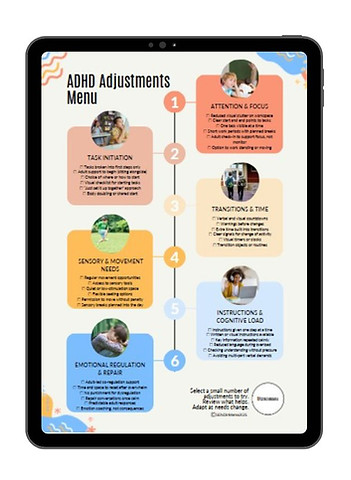
Designed for parents, carers, educators and professionals supporting children and young people with ADHD, this ADHD Adjustments Menu provides a clear, practical reference for adapting environments, expectations and support to improve regulation and access to learning.
This printable resource focuses on making thoughtful adjustments around the child, rather than trying to change behaviour. It is suitable for use across home, school, Early Years and professional settings, and can be printed, shared digitally or embedded into support plans, EHCPs and review paperwork.
What’s Included
This downloadable PDF Toolkit includes:
-
A structured adjustments menu across six key areas: Attention & Focus, Task Initiation, Transitions & Time, Sensory & Movement Needs, Instructions & Cognitive Load, and Emotional Regulation & Repair
-
Clear, practical adjustment ideas that can be selected and trialled individually, without overwhelm
-
Language that supports neuro-affirming, trauma-informed practice, moving away from behaviourist or compliance-based approaches
-
A simple framework encouraging reflection, review and adaptation as needs change
-
A clean, visual layout designed for quick reference during meetings, planning or day-to-day support
Who It’s For
This Toolkit is useful for:
-
Parents and carers supporting ADHD children
-
Early Years settings, schools and SEND provisions
-
SENCOs, Educational Psychologists, therapists and support workers
-
Professionals contributing to EHCPs, support plans or reviews
-
No specialist training is required to use this resource.
Why This Toolkit Matters
-
Children with ADHD often experience challenges with attention, task initiation, transitions and regulation that are strongly influenced by their environment. When adjustments are unclear or inconsistent, adults may feel stuck or unsure how to support effectively.
-
Having a clear adjustments menu allows adults to move away from reacting to behaviour and towards proactively supporting regulation and access. Small, thoughtful changes can reduce overwhelm, build trust and support emotional safety.
-
This resource supports a shift from “managing behaviour” to understanding what helps a child function and feel safe within their environment.